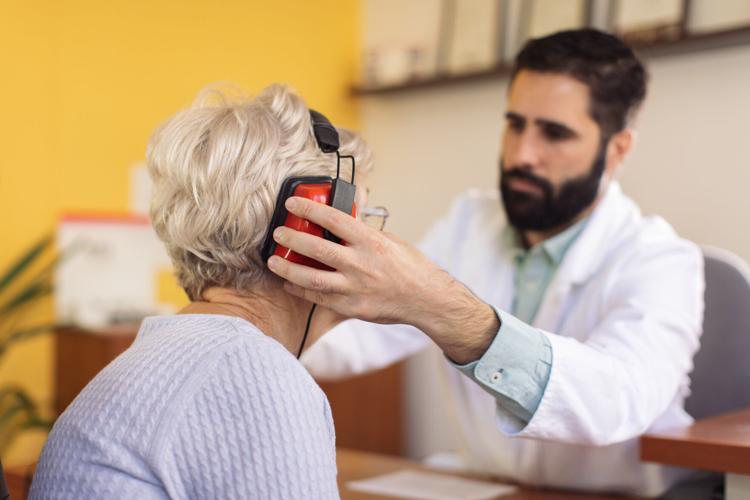


Along with regularly measuring your blood pressure, cholesterol and blood sugar, your health checkup should include a hearing test to protect your quality of life. Addressing hearing loss early can protect your brain health, too.
Not just the elderly
Hearing loss can affect anyone at any age, according to Tracy Hayden, audiologist and owner of Big Sky Audiology in Billings. For 30 years, Hayden has worked with adults and children with hearing difficulties, assisting them with hearing aids, listening strategies, assistive devices and counseling.
“It’s a misconception that hearing loss only affects older people,” Hayden said. Other myths include the mistaken belief that hearing is not a significant health issue, but an inconvenience.
More than noise
Hearing loss isn’t caused primarily by exposure to loud noise, notwithstanding reports from famous musicians who now have hearing loss. Aging, genetics, illness or infections, earwax buildup, certain medications and head injuries all can contribute to hearing loss, Hayden said.
Recognizing hearing loss
The signs of hearing loss vary depending on the severity and type. Difficulty understanding speech and regularly asking people to repeat themselves is a major tipoff. Turning up the TV, radio or smartphone volume, or sitting closer to the TV may also indicate reduced hearing.
Another sign is withdrawal, Hayden said. “People may feel frustrated or embarrassed by their inability to hear and actively avoid situations where they need to rely on their hearing.” Anyone experiencing these signs of hearing loss should see an audiologist for a comprehensive evaluation and diagnosis, she recommended.
Screen early and regularly
The American Speech-Language-Hearing Association recommends that adults ages 18 to 40 have a hearing test every three to five years.
Between ages 41 and 59, schedule a hearing test every other year, or more often if you have a family history of hearing loss, work around noise, have diabetes, are prone to middle ear infections or take medications that can damage the inner ear.
Adults who are over 60, have been exposed to loud noise or have been diagnosed with hearing loss should have an annual hearing test, Hayden said.
Hearing and brain health
“If left untreated, hearing loss can lead to an overall decline in a person’s health and quality of life,” Hayden said. “A growing body of research suggests a link between hearing loss and dementia.”
The link between hearing loss and cognitive decline is not fully understood, but may have to do with isolation and reduced brain input. “People with hearing loss often become isolated and withdraw from social interactions,” she said. This withdrawal means less cognitive stimulation and potential cognitive loss.
Furthermore, Hayden said, straining to hear and understand speech overloads the brain. “The increased effort to process auditory information can lead to cognitive fatigue and impairments in other cognitive tasks. Addressing hearing loss can reduce the cognitive load associated with listening and allow people’s brains to allocate resources to other cognitive processes,” she said.
Don’t wait to check your hearing
On average, adults wait nearly nine years before they address their hearing loss. Don’t delay — addressing your hearing today may protect your brain tomorrow. Call Big Sky Audiology at 406.656.2003 to schedule a hearing test or walk in to their Billings office at 111 S. 24th Street W, Unit 7.
This content is provided for informational purposes only by the advertiser and is not a substitute for professional medical advice or treatment. Please consult your healthcare provider for medical advice. Any views, thoughts or opinions in this paid post belong solely to the advertiser and do not represent the views of Brand Ave. Studios or its parent company.