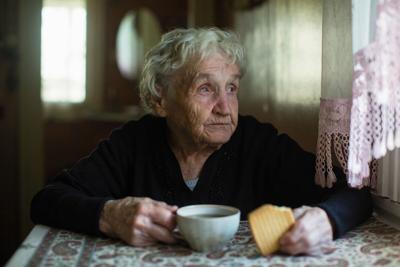


Photo provided by Deposit Photos
The United States has a loneliness problem, and for millions of older adults, it's quietly becoming a matter of life and death.
In 2023, the U.S. Surgeon General issued a formal advisory declaring loneliness a national health crisis. The findings were stark: chronic loneliness increases a person's risk of premature death by 26%. That figure isn't a projection or a warning about the future. It reflects what is already happening to aging Americans nationwide.
The Scale of the Problem
The numbers paint a sobering picture. According to the National Academies of Sciences, one in three adults over the age of 45 reports feeling lonely.
People are also reading…
These aren't people who have simply lost touch with friends. Many live alone after the death of a spouse. Others have outlived their social circles or face physical limitations that make leaving home difficult. For a significant share of the senior population, days can pass without meaningful human contact.
A Health Risk That Rivals Smoking
What makes this a public health crisis rather than just a social one is the measurable toll that loneliness takes on the body.
A widely cited meta-analysis from Brigham Young University found that the health consequences of chronic loneliness are comparable to smoking 15 cigarettes per day. That comparison tends to land hard, and for good reason: smoking is a recognized, regulated public health threat. Loneliness carries similar risks and receives a fraction of the attention.
The effects extend to the healthcare system itself. Social isolation among older adults costs Medicare approximately $6.7 billion annually. This includes higher rates of hospitalization, increased emergency care use, and accelerated cognitive decline, which are all outcomes linked to prolonged social disconnection.
Why Seniors Are Disproportionately Affected
Aging naturally narrows social networks. Retirement removes a daily source of structured interaction. Mobility challenges limit spontaneous visits. Adult children relocate for work. Spouses and longtime friends pass away.
None of these factors are unusual, but their cumulative effect can be devastating. Older adults who lose consistent human connection often experience faster cognitive decline, weakened immune function, and higher rates of depression. The biology of loneliness is well-documented, and seniors face more of its triggers at once than almost any other demographic.
Companion Care as a Meaningful Response
Addressing senior isolation doesn't always require clinical intervention. For many older adults, the most effective response is simply a consistent, reliable human presence.
This is where services like Visiting Angels' companion care for seniors play a meaningful role. Companion care goes beyond physical assistance. It provides regular visits, conversation, and the kind of social continuity that can otherwise disappear from a senior's daily life. For families who can't be physically present, it offers a practical way to reduce isolation without waiting for a health crisis to act.
The distinction matters. Loneliness is not a medical diagnosis, but it produces medical outcomes. Treating it requires solutions that operate in the everyday spaces where connection either exists or doesn't.
A Crisis That Demands More Than Awareness
The Surgeon General's advisory was a significant moment. It signaled that loneliness had crossed from a personal struggle into a recognized public health priority. Policy conversations are beginning to catch up, with proposals ranging from expanded social services to infrastructure changes designed to support aging in place.
Still, policy moves slowly. For the one in three older adults already living in isolation, the gap between awareness and action is wide.
Families making decisions about aging relatives, and communities designing systems to support them, are being asked to weigh a risk that is no longer speculative. The data is clear. Social isolation shortens lives, strains healthcare systems, and costs the country billions each year.
The question is no longer whether senior loneliness is a crisis. The question is who responds to it, and when.