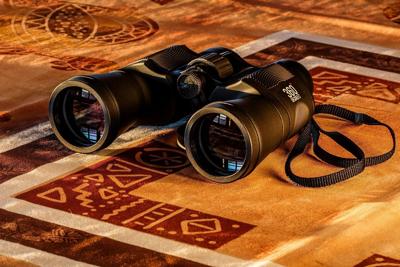


People are accustomed to using a variety of night vision devices (binoculars, scopes). They improve visibility and open up unlimited possibilities for work and entertainment. However, NVDs have one significant drawback. Their use disrupts natural vision and creates particular problems for users. Can this problem be eliminated? Not entirely, but the situation can be significantly improved quite easily.
Causes of loss of natural vision at night
Surely, each of you has noticed that immediately after leaving a well-lit room at night, your vision is much worse than after spending a long time in the dark. This is due to a characteristic of the visual system. The retina contains so-called Rod cells. They are susceptible to low light, allowing a person to see at night, albeit not very well. However, when exposed to bright light, the pigment rhodopsin found in Rod cells is destroyed. This leads to decreased visibility and temporary blindness.
People are also reading…
How to maintain natural vision at night?
Changing brightness settings
The best way to preserve natural vision at night is to adjust the brightness settings on your device's display. There are a few basic rules to follow.
1. The first is to select the minimum brightness setting that keeps images sharp and allows fine details to be clearly visible. This will reduce the impact of bright light on your eyes and, consequently, improve natural vision at night.
2. Impaired night vision can be avoided with simple eye exercises. The simplest is to observe with one eye closed. This will preserve the ability to see in the dark. Another method is to alternate eyes. This will reduce strain on each eye and allow natural vision to recover. The effect is powerful with frequent alternation. This will prevent the eyes from completely losing their ability to see in the dark and will allow natural vision to return to its maximum potential more quickly.
3. Pauses are essential in any activity. Whether it's work, play, or sports, short breaks can help you unwind and recharge. Breaks are also necessary when using night vision devices. Taking frequent breaks will minimize disruption to natural vision at night and restore it in just a couple of minutes. The situation should determine the length of breaks.
Recommendations for using night vision equipment in the dark
The first and most important recommendation is to prepare the optics in advance. This means, before turning on the device in the dark, adjust the brightness correctly, remove unnecessary information from the display, and check for protective accessories. This will minimize natural vision impairment from the very first second of using the optics. The following recommendation is to only look at the display when necessary (for example, when scanning the area, searching for objects, etc.). In other cases, it is better to look away. Finally, avoid bright light (flashlights, spotlights, smartphone screens, etc.) when using the optics. This will help reduce the adverse effects and protect natural vision.