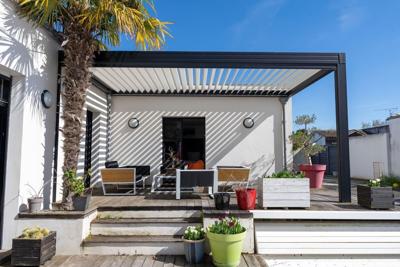


Photo provided by DepositPhotos
Homeowners spend thousands on outdoor upgrades every year with the expectation that the investment will pay off at resale. The reality is more complicated. Not every structure adds value equally, and some can work against you. Before you commit to a build, here's what the numbers actually say.
Covered Outdoor Space Has Genuine Buyer Demand
According to the National Association of Realtors, 97% of real estate professionals believe curb appeal is important in attracting a buyer, and 92% recommend sellers improve it before listing. That demand isn't limited to lawn care. Covered outdoor living has become one of the most consistent buyer preferences in residential real estate.
People are also reading…
According to industry data, a well-executed outdoor living space can add 8% to 12% of value to a home, with an ROI exceeding 80% when quality is prioritized. Covered outdoor spaces consistently rank high on buyers' wish lists and are cited as a reliable way to maximize return.
The key phrase there is "when quality is prioritized." A cheap or poorly proportioned structure can detract from value rather than add to it.
Patios Deliver, But Material and Execution Determine the Return
A national average project combining a flagstone patio and pergola came in at $51,000, adding roughly $28,000 in home value, representing about a 54.9% return. Regional variation is significant. The same backyard patio was rated 27% higher in value in Orlando than in Houston.
Wood deck additions have delivered a 71.5% average ROI in some analyses, while backyard patios have averaged around 54.9%. These numbers depend heavily on your local market conditions and how well the structure integrates with the existing home.
An appraisal professional noted that patios earning the strongest returns are ones that look as if they were part of the home from the beginning, proportionate to the structure and property, not outscaling either.
Pools: High Joy Score, Low Financial Return
The pool is where expectation and reality diverge most sharply. The NAR's 2023 Remodeling Impact Report notes an average 56% ROI for inground pool installations, but in states like Illinois, Oregon, and Minnesota, a pool may add little to no value and can function as a liability that prompts buyers to factor in removal, maintenance, or insurance costs.
While the maximum ROI on a pool under the best conditions is high, the average for most homeowners sits closer to 7%. Insurance premiums increase because of the added liability, and pools cannot be used year-round in most of the country, which reduces their resale appeal.
Pools score a perfect 10 for personal enjoyment in the NAR data. But financial return depends almost entirely on climate, neighborhood norms, and buyer preference. In most markets, they perform worse than a well-built covered patio.
Permanent Structure vs. Temporary Installation: The Durability Divide
Where structural permanence matters most is in how an appraiser and a buyer perceive the longevity of what you've built. A pergola or patio cover made from a material that visibly ages, warps, or requires ongoing maintenance signals future expense to buyers, not value.
High-quality aluminum structures with quality powder coating can deliver 20 to 30 or more years of service in residential settings, including coastal and high-UV climates. Aluminum resists rot, rust, and insect damage while maintaining color and finish with minimal upkeep.
Wood pergolas typically last 10 to 15 years with regular care, while aluminum structures can extend to 25 or more years, often requiring only occasional cleaning with soap and water two to three times per year. The annual maintenance cost difference between wood and aluminum can add up to $200 to $500 per year in materials and labor.
Builders who want resale value from a covered outdoor structure should look at structures built for permanence. The Luxury Pergola offers custom aluminum pergolas designed around structural longevity, weather resistance, and low maintenance, qualities that translate more directly to appraised value than decorative or temporary alternatives.
What This Means for the Broader Outdoor Living Market
The outdoor living category has moved from a nice-to-have to a serious line item in home buying decisions. The NAR reported that consumers rated all 11 outdoor projects studied with joy scores of 9 or above, and 84% said completing an outdoor project made them want to remodel other areas of their home or yard.
The financial outcome, however, is determined by structure type, material quality, market conditions, and proportionality to the home. Covered outdoor spaces, particularly permanent ones, sit at the intersection of high buyer demand and measurable financial return. Pools and oversized installations are more situational.
The market is rewarding permanence. Buyers increasingly treat functional outdoor structures the same way they treat interior square footage: they want it built well, built to last, and built to match the home it belongs to. If you're spending at the high end, the structure should reflect it.