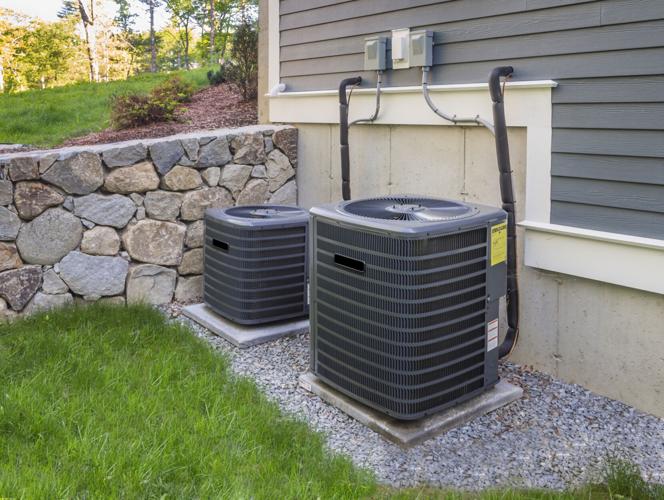


Residential heating and air conditioner compressor units near suburban house
If you make a purchase after clicking on links within this article, Lee Enterprises may earn affiliate commissions. The news and editorial departments had no role in the creation or display of this content. All opinions and views are of the advertiser.

Heating, cooling, and plumbing — from a team that's been doing this in the region for over 30 years.
- Available 7 days a week: HVAC Emergencies Don't Keep Business Hours
- Guaranteed in writing: Written estimate you approve before any work starts
- Your Satisfaction is 100% guaranteed
Free estimates · Licensed & insured · Serving greater Charlotte and surrounding areas
Pull up last July's power bill and compare it to July a couple of years ago. If the number went up and you can't explain why, the most likely culprit is already running in your house.
HVAC systems don't usually fail all at once. What they do is get gradually less efficient, quietly pulling more electricity to do the same job while the bill creeps up in ways that are easy to explain away. Hotter summer. Rate increase. Must be something. Sometimes it is something else. Mostly it isn't.
What high energy bills are actually saying
A system that's working harder than it should to maintain temperature is usually doing so for one of a few reasons. A dirty air filter restricts airflow and forces the equipment to compensate. Refrigerant that's low doesn't absorb heat the way it should, so the system runs longer cycles trying to catch up. Coils that haven't been cleaned in a season or two lose efficiency in ways that don't show up anywhere except the bill. Capacitors and contactors that are starting to wear don't always fail dramatically — they just make the motor work harder.
None of these are dramatic. They're just expensive over time. HVAC problems and high energy bills tend to go together for exactly this reason: the system is still running, still cooling or heating, just not doing either particularly well.

A technician is servicing an air conditioning unit located beside a modern home. Dressed in work attire, he uses tools from an organized toolbox while seated on the grass. The setting features a wooden wall and bright blue windows, indicating a well-maintained property.
The filter thing, since most people don't change it often enough
A clogged filter is probably the single most common cause of reduced efficiency in residential HVAC systems, and it's also the easiest fix. One-inch filters should be changed every 30 to 60 days depending on the household. If there are pets or anyone with allergies, lean toward the shorter end of that range. If you can't remember the last time you changed it, change it now and see what happens to the next bill.
That said, if bills have been climbing for multiple seasons and a filter swap doesn't move the needle, the problem is something a technician needs to look at.
What a tune-up actually does for the energy bill
This is where Brothers comes in. Air conditioning maintenance from Brothers involves a full inspection and cleaning of the system, calibration to make sure it's operating the way it was designed to, lubrication of moving parts, and a thorough look at anything that's showing early signs of wear. Brothers has been doing this work in the Charlotte region since 1985 and recommends tune-ups twice a year, once before cooling season and once before heating season, specifically because a well-maintained system runs measurably more efficiently than one that only gets looked at when something breaks.
The math tends to work out. A tune-up costs less than a month of inflated bills, and it usually finds the thing that's been causing them.
When the bill is telling you something bigger
Sometimes the efficiency problem isn't a maintenance issue. It's an age issue. A system that's 12 to 15 years old and showing up in high energy bills every summer may be at the point where repair costs and ongoing inefficiency together make replacement the smarter financial call. A good technician will tell you which one you're actually looking at rather than just scheduling another service visit.
Either way, the bill is usually right. If it's been going the wrong direction, it's worth finding out why.