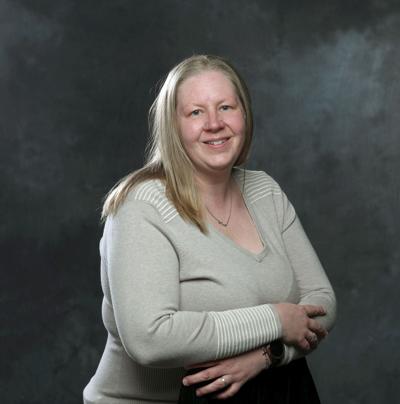

NURSE: Bridget Sturgin, RN
EMPLOYER: Intermountain Health St. Vincent Regional Hospital
NURSING PROGRAM: Mercy College of Ohio
FOCUS: Oncology
YEARS OF SERVICE: 5

Bridget Sturgin, St. Vincent Regional Hospital.
After more than a decade working in administrative roles, Bridget Sturgin found herself ready for something different — a path that felt more meaningful than the routine she had grown used to.
“I needed a change,” Sturgin said.
She spent about 12 years in office-based roles, including time with a construction company, before deciding to make a change. That search led her into the medical field, where she trained and began working as a medical assistant — a shift that gave her a more hands-on role with patients.
People are also reading…
She quickly realized she had found the right environment.
“I loved being in the medical field,” Sturgin said, adding that a physician she worked with encouraged her to take the next step and pursue nursing — advice that would ultimately change the course of her career.
“That meant I had to leave that position to go to nursing school,” Sturgin said.
Sturgin describes nursing as her third career — one shaped by years of experience in other fields that continue to influence her work.
“There are so many skills that transfer,” Sturgin said. “Even now, I still use things I learned in my previous jobs.”
After graduating, Sturgin began her nursing career in Ohio, working on an ICU step-down unit before relocating to Montana. She later found her way into oncology — a direction shaped in part by deeply personal experiences, including her father’s cancer diagnosis during nursing school and her sister-in-law’s long battle with the disease.
“That really inspired me,” Sturgin said.
She now works on an inpatient oncology floor, where she cares for patients receiving chemotherapy as well as those experiencing complications from treatment.
For Sturgin, one of the most meaningful aspects of her work is the relationships she builds with patients over time.
“I have been with multiple patients from the day they are diagnosed through their entire treatment,” Sturgin said. “You get to know them and their families really well,” Sturgin said. “I try to be a steady, encouraging presence for patients during difficult moments.”
Those connections allow her to support patients not only physically, but emotionally — helping them navigate some of the most difficult moments of their lives.
She describes her approach as encouraging and steady, often using humor and conversation to help patients feel more at ease.
“I want them to smile and interact,” Sturgin said.
Among her coworkers, she is known as a dependable resource — someone others turn to for help.
“I’m a go-to person,” Sturgin said, noting that supporting others is something she takes pride in.
For Sturgin, nursing is about more than clinical care — it’s about understanding the full picture of what patients are experiencing.
“We see people at their darkest hour,” Sturgin said. “If we can help lift them up, even a little bit, that makes a difference.”