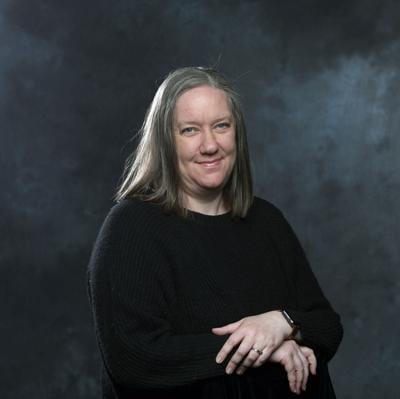

NURSE: Amber Brien, BSN, RN
EMPLOYER: Billings Clinic
NURSING PROGRAM: City College at Montana State University – Billings and Montana State University – Billings
FOCUS: Pediatric specialties
YEARS OF SERVICE: 8

Amber Brien, Billings Clinic
After working as a graphic designer for several years, Amber Brien realized she wanted something different — a career that offered stability and a deeper sense of purpose. With a degree in hand and a young family at home, she made the decision to return to school and pursue nursing — a path she once considered.
“Graphic design wasn’t what I thought it was going to be,” Brien said. “I remember wanting to be a doctor when I was little, and I thought nursing would be an easier pathway.”
People are also reading…
Brien earned her associate degree in nursing through City College in Billings before completing her bachelor’s degree at Montana State University Billings. She began her career on an inpatient cardiovascular unit, gaining foundational experience as a new nurse. After two years, she transitioned into pediatric hematology, oncology and infusion services — a specialty she had her eye on.
“When it came to choosing a field, I always knew I wanted to work with kids,” Brien said.
In her current role, Brien cares for pediatric patients with a wide range of conditions, from blood disorders such as hemophilia to cancer diagnoses requiring chemotherapy and ongoing treatment. Working in an outpatient setting, she helps administer infusions, manage IV access and support patients and their families throughout their care.
While pediatric oncology can be difficult, Brien says the long-term nature of the work allows her to see patients through every stage of their journey — from diagnosis to recovery and beyond.
“We see them for years,” Brien said. “We get to watch them go through treatment, recover and come back for follow-up. It’s a unique perspective that includes challenging moments and meaningful progress — but we have more good days than bad.”
Brien describes her approach as calm and adaptable, adjusting to each patient’s needs and personality. She enjoys building rapport but can also quickly shift her approach when a patient prefers less interaction.
“If a kid doesn’t want to talk and just wants you to get in and get done, that’s OK,” Brien said.
When it comes to turning off her thoughts after a shift, Brien says that’s something she’s still working on.
“I don’t know that I’ve figured that out,” Brien said. “It’s difficult to justify worrying about certain things at home when I know the kids and families I work with every day are going through really difficult things they have no control over.”
Over time, she says her confidence has grown, particularly in advocating for her patients and communicating within her team. That growth, shaped by the realities of the job, has influenced how she approaches her work and the profession.
“I’m probably better at asking for what I need and advocating for my patients,” she said. “It’s not all touchy-feely — kindness is important, but you’ve got to be ready to work.”