



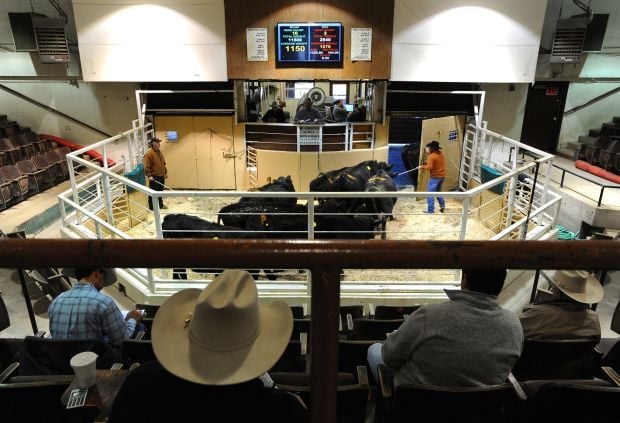
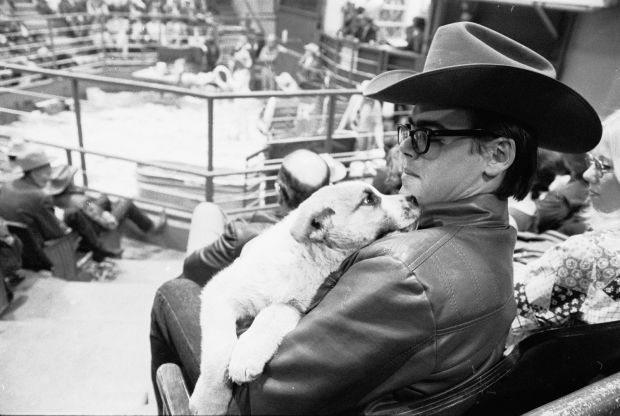
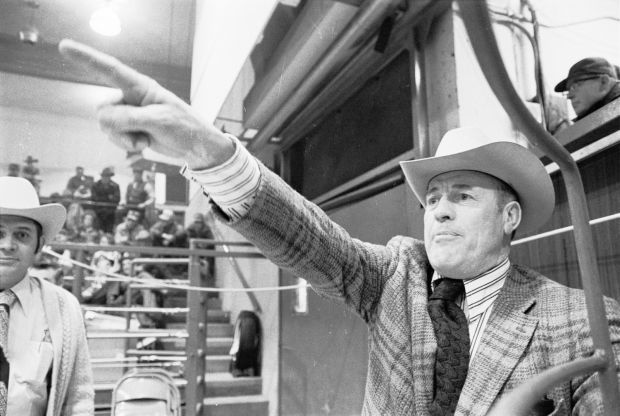
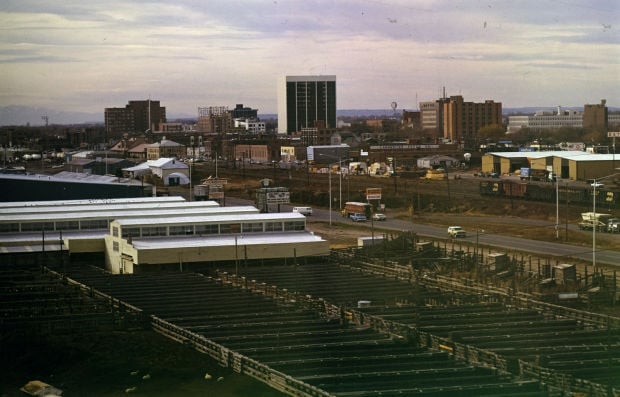
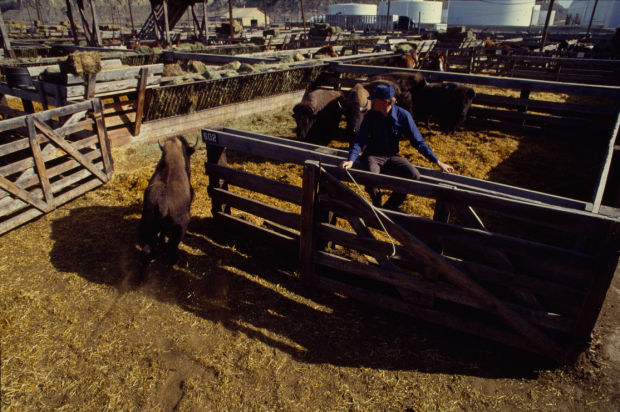
It’s Wednesday at the iconic Public Auction Yards of Billings. There are 350 head of mostly Angus cattle standing in the maze of pens outside, and several dozen cowboys are chewing the fat in the auction house lobby where an old cow dog has dozed off in the middle of the floor.
Auction manager Bob Cook has allowed the sale start time to drift 90 minutes past schedule to accommodate any stragglers, but he rises from his office chair after glancing at his watch and heads to the lobby.
“Looks like I have to call the sale” Cook said. He makes his way to the office door and shouts “the livestock market is open.”
The chatter in the hallway is quickly replaced by the thud of boots heading up the stairs to the auction arena. A half-dozen stockyard hands armed with rattle paddles rush to the yard to begin driving cattle to the sales scale.
People are also reading…
If it’s Wednesday in Billings, there’s most likely cattle being sold at PAYS. This gritty corner of Minnesota Avenue on the city’s South Side has been home to livestock sales since at least 1939. Wednesday was a slow one. That’s because most of Montana’s calves go to market in the fall, after which activity drops significantly. But more than 220,000 cattle were sold in Billings in 2014. About half of those crossed the PAYS scale. The rest went through the Billings Livestock Commission in Lockwood.
The two livestock auction barns were once both located in this neighborhood of dirt parking lots and buildings made of cinderblock and corrugated metal. It was the meat capital of Montana, with Pierce Packing Co. cranking out Old Faithful brand bacon on Main Street and the Midland Empire Packing Co. cranking out beef just a short walk away. Both packing companies had smokers, and the smell of meat commerce hung in the air.
Cattle sold at Billings Livestock were literally walked out of the stockyard to Midland, Cook said. Pierce wasn’t an auction regular, often opting for Midwest hogs, but the company occasionally turned to PAYS for pork, and when it did, it could buy as many as 1,500 hogs in a week.
Originally, the neighborhood was dominated by commissions that took cattle on consignment and sold them on public docks at the Union Stockyard. Buyers would purchase cattle, load them on trains and ship them out. There weren’t sales through live competitive bidding.
Billings ranch families remember those days. Charlie Yegen’s father, Peter II, frequented the Union Stockyards, which is where he not only sold cattle but where he also met his wife, who was working as a bookkeeper for her father’s consignment business, C.L. Govern & Co.
“When dad met mother, she was down there working for granddad’s commission company. Dad heard there was this good-looking girl working down there. He took his father’s ’38 Cadillac and put a tiny, dinky trailer on the back. Got an old, broken-mouth cow, put her in the trailer and went to the stockyards,” Yegen said. “He got C.L. Govern to take it on consignment.”
Yegen’s mother, Virginia Govern, was not impressed with Peter. “He looked terrible. His pants were torn up. She didn’t like the way he looked, didn’t like anything about him, and within a year they were married,” Yegen said.
The Yegens’ truck practically points itself to PAYS when the stock trailer is hooked to the hitch.
“We like the sales energy, frankly,” Yegen said. “If there’s variation in the cattle, if you have cattle that are uneven, it’s nice to be able to have the guys in the yard, who are really good at it, make up groups that are agreeable to the buyer.”
Yegen credits PAYS founder Pat Goggins with making the Billings auction scene the industry that it is.
The livestock auction was started in 1940 by 13 stakeholders who ran it as the Public Livestock Market Center. But a dozen-plus-one ownership wasn’t working out. They approached Goggins, a rancher and publisher of the Western Livestock Reporter, and offered him the auction yard. Goggins bought the business a half century ago and turned PAYS into the mainstay of Montana’s livestock industry. The ring scale, on which cattle are displayed to buyers while their combined weight is posted overhead, is a Goggins invention. First used in Billings, it is now an industry standard.
The Goggins family also owns Billings Livestock Commission.
In this Series
52 reasons to love Yellowstone County

Tom Lutey
Agriculture and Politics Reporter


