
Courtesy of Creative Design Works and redlodge.com
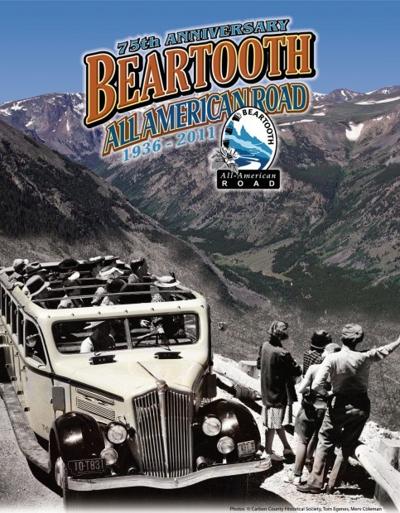
If a man named J.C.F. "Doc" Siegfriedt had listened to what anybody was telling him in the 1920s--anybody at all--the Beartooth Highway, that unforgettable 68-mile stretch of winding, cliff-hugging, cloud-skimming road from Red Lodge, Mont. to the entrance of Yellowstone National Park, simply would not exist. But by all accounts, Doc was a force of nature, and from the time he arrived in Montana, he had his heart set on building a road that would connect the Red Lodge area with the wonderland of Yellowstone. On June 14, 1936, after 17 years of planning and hard work, Doc led a honking caravan of cars from Red Lodge up the Beartooth Highway to formally declare the road open for travel. This summer, the public is invited to help celebrate the 75th Anniversary of this visionary's dream come true.
On June 10 and 11, Red Lodge, Montana, is going all-out in to celebrate the 75th anniversary of the Beartooth All-American Road. Weekend festivities include a free BBQ, free admission to local attractions and a community parade.
People are also reading…
The Beartooth Scenic Byway
Yellowstone's Highway to the SkyDubbed "the most beautiful roadway in America" by On the Road correspondent Charles Kuralt, the Beartooth Highway climbs to an astounding 10,947 feet above sea level. Since its completion in 1936, the Highway has awed millions of visitors with its astonishing views of one of the most rugged and wild areas in the lower 48 states.
As it winds its way between the northeastern entrance of Yellowstone National Park and Red Lodge, Mont., the highway traverses an impressive range of ecosystems - from lush lodge pole pine forests to alpine tundra. At the highway's summit, travelers find themselves in a sky-high world of glacial cirques, clear alpine lakes and snow that lingers through the summer months. The extreme climate at this elevation deters the growth of trees and shrubs, and the plants that do grow here have adapted in remarkable ways. Some convert sunlight to heat, and many conserve water the way desert plants do. In late June and July, the fragile tundra blossoms in a lavish display of wildflowers - shooting stars, columbine and Indian paintbrush, to name a few.
With 20 peaks more than 12,000 feet in elevation (including Granite Peak, Montana's highest at 12,799 feet), the Beartooth Mountains lie within the 943,377-acre Absaroka-Beartooth Wilderness. Grizzly and black bears make their home here, as do elk, deer, moose, Bighorn sheep, Rocky Mountain goats, mountain lions and bobcats. With more than 950 alpine lakes and hundreds of miles of trails, these mountains offer ample opportunities for recreation - much of it accessible from the Beartooth Highway.
Plan on at least two hours driving time to make the trip between Yellowstone and Red Lodge - more if you really want to experience the beauty of the Beartooths. Whether or not you plan to stop and explore a while on your way, be sure to pack your windbreaker and woolens for the trip: it can be a bit nippy at the summit of Yellowstone's own Highway to the Sky.
For more information please visit www.beartoothhighway.net or www.redlodge.com.