

In July 2023, David Mostek was in his home office when he knew something was wrong. He was having trouble breathing and could barely stand, but he knew that if he could get his wife’s attention, he could get help. He made as much noise as he could, kicking the wall and praying for her to come upstairs, and when she entered the room, he collapsed.
His wife called 911 and Mostek was transported to the hospital. EMS had alerted the hospital that a potential stroke patient was en route, and after conducting tests, doctors confirmed Mostek was having a stroke. He was transferred to a stroke-capable hospital in Spokane, where he had surgery to remove the clot in his brain. After a few weeks of recovery in the ICU, he was transferred back to Kalispell for in-patient rehabilitation and recovery.
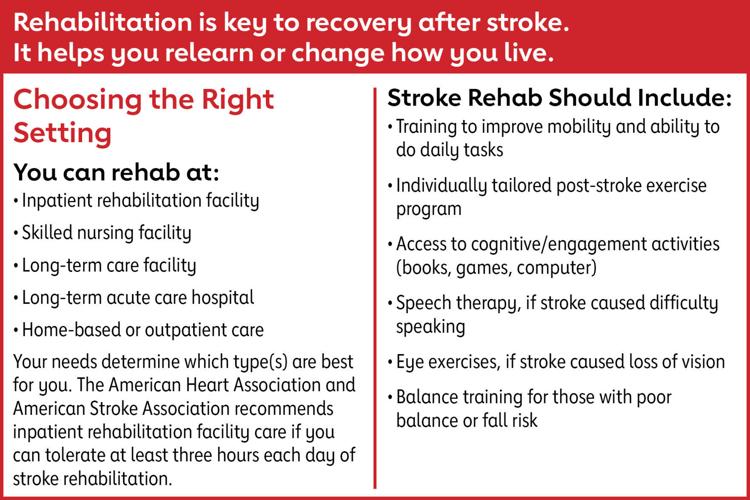
For Mostek and the 1 in 4 adults over the age of 25 who will experience a stroke in their lifetime, there is life — and hope — after a stroke. Rehabilitation can build strength, capability and confidence. It can also help someone who experiences a stroke continue daily activities, despite the effects of their stroke.
There are more than 7 million stroke survivors living in the U.S. today. But not all strokes — and not all stroke survivors — are the same. Finding the right rehabilitation plan is vital to recovery after stroke. The American Stroke Association has developed standards to help rehabilitation facilities provide consistent, high-quality care for individuals as they recover from stroke.

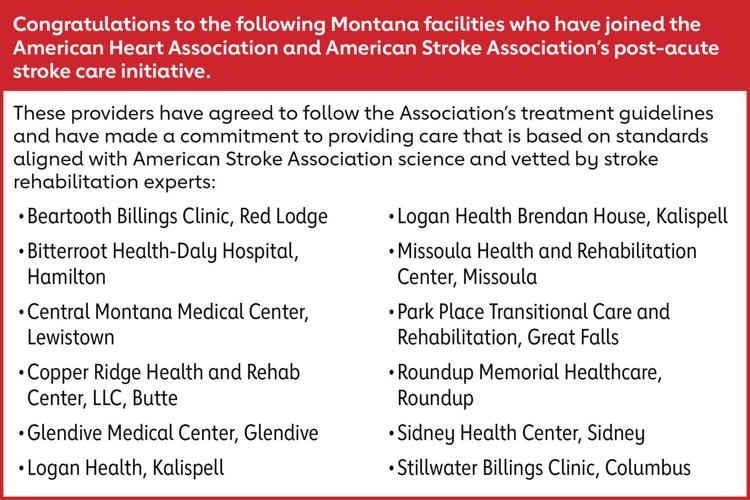
Facilities that have agreed to participate in the Association’s post-acute stroke standards program agree to follow the Association’s treatment guidelines and have made a commitment to providing care that is based on standards aligned with American Stroke Association science and vetted by stroke rehabilitation experts.
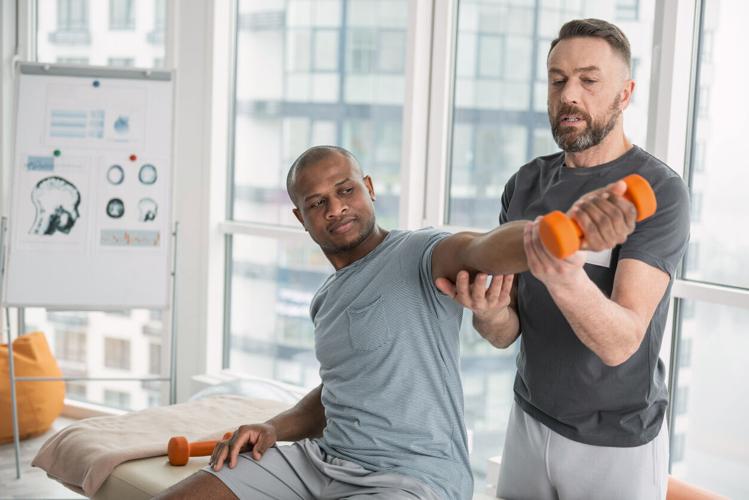
Mostek’s rehabilitation at Logan Health Medical Center in Kalispell, one of several Montana facilities participating in the association’s post-acute stroke standards program, included PT, OT and speech therapy. Mostek said he focused on his recovery like it was his job, and the team at Logan Health supported his efforts by “treating the person, not the condition.”
“I put myself into it with everything I’ve got,” he said. “There are two things I can control: my attitude and my effort. If I was going to get graded on either of those, I wanted it to be an A-plus!”

Mostek’s rehabilitation plan was tailored to his unique needs, and when he was immediately surpassing the goals his care team set for him, they set even higher goals for him to achieve. The former Marine joked that if they told him to do 40 laps around the hospital, he did 80.
“Thessalonians chapter 2, verse 8, says that ‘So deeply do we care for you that we are determined to share with you … our own selves, because you have become very dear to us,’” Mostek said. “That’s how I felt they cared for me, so I was determined to treat it as my God-ordained job to recover.”
For more information, visit heart.org.