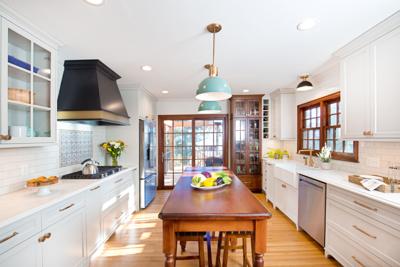


A contemporary classic renovation remodeling kitchen interior design in a modern residential home.
Twenty-eight percent of surveyed homeowners say a dream kitchen remodel would feel more satisfying than a dream vacation. That number deserves a moment of attention before anyone rushes past it. We live in a culture that has spent the better part of two decades telling people that experiences matter more than things — that the memories from a trip to Portugal will outlast the pleasure of any physical purchase. And yet here is a meaningful slice of the American homeowner population saying, without apparent irony, that ripping out their cabinets and installing new countertops sounds better than a week on the Amalfi Coast.
That is not a financial calculation talking. That is something deeper.
The Satisfaction Data: What it Actually Measures
The 28% figure comes from a December 2025 Rocket Mortgage survey of 1,018 US homeowners examining homeowner renovation vs. vacation spending priorities. It sits inside a larger finding that three out of four homeowners — 75% — would choose a $20,000 renovation over a vacation of equivalent cost if they had to pick one. Taken together, these numbers suggest that the preference is not an outlier sentiment held by a frugal minority. It reflects something closer to a broad cultural reorientation around what "spending well" actually means.
People are also reading…
The kitchen and bathroom results follow a consistent logic. Bathrooms ranked first among interior renovation priorities at 28%, with kitchens close behind at 25%. These are not the rooms people show off on social media with the same frequency as a beach photo, but they are the rooms people use every single day. The satisfaction they generate is less peak and more persistent — and that distinction matters more than most people realize when they sit down to evaluate what their money actually bought them.
Behavioral economists have a term for part of what is happening here: the endowment effect. Once something becomes yours — physically integrated into your daily environment — you assign it a higher value than its market price would suggest. A renovated kitchen is not just a kitchen. It is the room where you made Sunday breakfast after the contractors finally left, where guests now linger longer than they used to, where the layout finally makes sense. The vacation fades in the telling; the kitchen stays.
Why the Physical Beats the Experiential for Most Homeowners
This cuts against a well-cited body of research, including a 2003 study by Leaf Van Boven and Thomas Gilovich, which found that people report greater long-term happiness from experiential purchases than from material ones. Their argument was compelling: experiences are harder to compare unfavorably against what other people have, and they integrate more naturally into personal identity over time. You are what you do, not what you own.
But there is a category of physical purchase their framework did not fully account for: the home improvement. A kitchen remodel is not a couch or a television. It is a structural change to the place where you spend most of your private life. It has a daily recurrence that a vacation cannot match. The trip to Portugal happens once. The kitchen happens every morning.
There is also a social dimension to renovation that parallels the social dimension of travel. The survey found that 53% of homeowners say friends and family influence their renovation decisions — the single highest influence factor, ahead of contractors at 31% and design shows at 27%. People talk about their renovations the way they talk about their trips. They show photos. They compare notes. The experience of renovating, it turns out, functions more like an experience than a purchase in several of the ways that matter psychologically.
The Financial Reinforcement Loop
The psychology would be interesting on its own. The financial layer makes it harder to argue against.
Forty-seven percent of respondents said resale value factors significantly into their renovation decisions. That number explains why kitchens and bathrooms dominate the preference data. These are the rooms buyers scrutinize most in a home sale, and homeowners know it. The renovation is not purely an act of self-indulgence — it is partly a medium-term financial decision dressed in the language of personal preference.
The funding data reinforces how seriously homeowners treat these projects. Fifty-three percent said they would use personal savings for their renovation, while 47% said they would turn to financing. Within that financing group, HELOCs were the most common vehicle at 13%, followed by home equity loans at 10% and credit cards at 10%. The willingness to borrow against a home's equity to improve that same home is a signal of genuine conviction. People do not typically take on debt for something they feel ambivalent about.
The macro numbers support the individual psychology. Harvard's Joint Center for Housing Studies reported that US remodeling spending reached approximately $608 billion in 2025 — roughly 50% above pre-pandemic levels. That is not a trend driven purely by inflation or aging housing stock, though both are factors. It reflects a sustained prioritization of the home as an investment category, a lifestyle environment, and an identity statement all at once.
What a Preference Shift This Large Actually Signals
When 75% of homeowners say they would choose a renovation over a vacation at the same price point, you are not looking at a niche attitude. You are looking at a majority position that probably deserves more cultural analysis than it typically receives.
Part of what is happening is a recalibration of where comfort lives. The pandemic accelerated a process that was already underway — people became more conscious of their homes as environments that could either support or drain daily life. A kitchen that works badly costs you something every day. Fixing it pays dividends at the same frequency.
Part of it is also a quiet skepticism toward the idea that the best version of your money is always the one that takes you somewhere else. Vacations are temporary by definition. A well-executed renovation is present-tense, ongoing, and yours. For a growing majority of American homeowners, that turns out to be the more compelling offer.