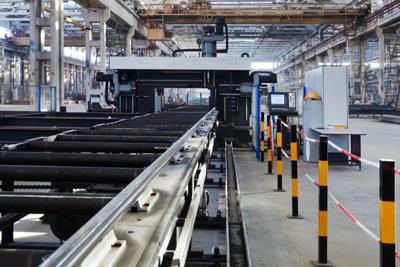


Photo provided by DepositPhotos
American manufacturing has a math problem. Companies announced 244,000 new jobs through reshoring and foreign direct investment in 2024, according to the Reshoring Initiative, which has tracked more than 2 million announced jobs since 2010. Training is expanding too. Yet Deloitte and The Manufacturing Institute project that as many as 1.9 million manufacturing jobs could go unfilled by 2033.
More hiring announcements and more training, yet the projected shortfall runs into the millions. The numbers start to add up once you look at who is leaving the factory floor and what walks out with them.
Manufacturing needs up to 3.8 million workers by 2033
People are also reading…
The Deloitte and Manufacturing Institute study estimates the industry could need as many as 3.8 million additional workers between 2024 and 2033 as investment continues to grow the sector. Without changes, more than 5 in 10 of those positions could stay open. In the National Association of Manufacturers' 2024 first-quarter outlook, 65% of respondents named attracting and retaining talent as their top business concern.
Employment fell 6.6 million since 1979, concentrated among non-degree workers
The demand side is only half the equation. Research from the Federal Reserve Bank of Cleveland covers the supply side. Between 1979 and 2025, total U.S. employment grew by 68 million while manufacturing employment fell by 6.6 million. Jobs for workers without college degrees took the brunt, declining by roughly 7.9 million over the same stretch.
Today about 12.8 million Americans work in manufacturing. The Cleveland Fed's analysis also counts current workers aged 60 to 68 without degrees, the group most likely to retire within the next decade, and finds them present in large numbers across nearly every region it studied.
The headcount misses something. A machinist who has run the same line for 25 years knows tolerances and shortcuts that never made it into a manual. Two workers can hold the same title on paper while one of them holds decades of production memory the other has yet to earn.
Documented processes outlast the people who wrote them
Production doesn't stop when a veteran retires, but every undocumented step becomes a question someone else has to answer from scratch. The practical fix is moving that knowledge out of individual memory and into the production record itself. That's the case for manufacturing inventory software that lets teams write instructions into each stage of a bill of materials and track work orders and labor against them, keeping a refined process on file after its author leaves.
The training pipeline raises the stakes on documentation. U.S. manufacturing apprenticeships rose 83% over the past decade, per the Reshoring Initiative, but the group says far more skilled workers are needed to sustain reshoring growth. New workers are arriving in shops where mentors are scarcer than they were a generation ago, and a written procedure is often the only handoff available.
Workers stay 2.7 times longer when they can build future skills, study finds
The retirement wave arrives just as the industry ramps up its recruiting calendar. Every October, Manufacturing Day events pitch factory careers to students, and that push matters. The Deloitte and Manufacturing Institute research adds a second reason to write things down: employees are 2.7 times less likely to leave within a year when they believe they can acquire the skills their future requires. A factory that documents what its veterans know protects current production and gives its newest hires a way to learn the trade before the teachers are gone.