
Promotes impact of Shared Stewardship Agreement with Forest Service
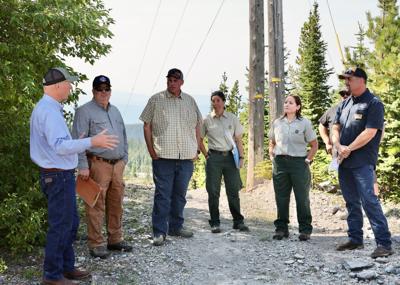
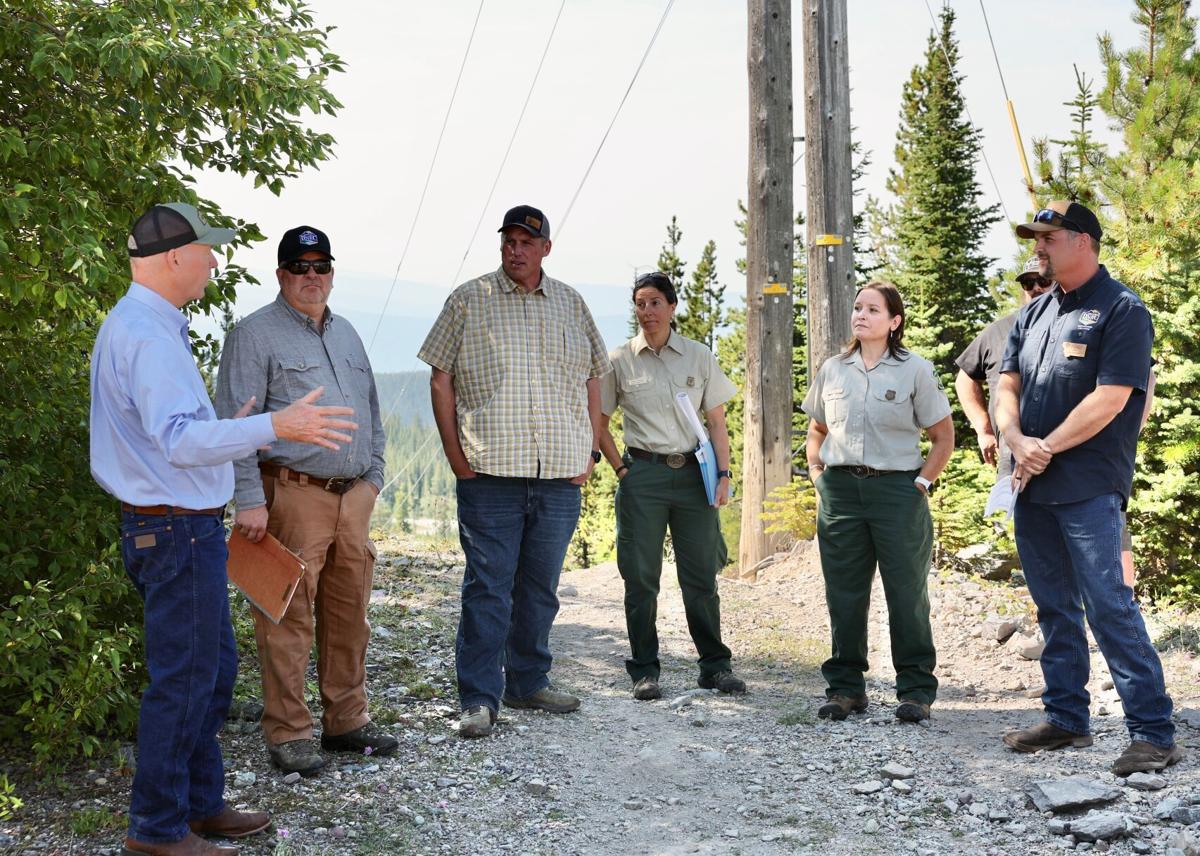
LAKESIDE, Mont. – Governor Greg Gianforte recently joined officials from the Montana Department of Natural Resources and Conservation (DNRC) and the U.S. Forest Service (USFS) to visit the Blacktail Powerline Project near Lakeside on the Flathead National Forest, which is the first initiative announced under Montana’s Shared Stewardship Agreement.
“Through our Shared Stewardship Agreement with the Forest Service, management partners are working across boundaries to better reduce wildfire risk and restore healthy forests,” Gov. Gianforte said. “The Blacktail Powerline Project was a high priority for fuels reduction and it’s great to see progress to reduce fuels loads to protect nearby communities and vital power infrastructure that serves the Flathead Valley.”
In June 2025, Gov. Gianforte and USFS Chief Tom Schultz formalized a first-of-its-kind, 20-year Shared Stewardship Agreement between the state of Montana and the USFS to increase the pace and scale of forest management. Since the agreement was signed, the governor and DNRC announced the selection of three priority landscapes covering over 750,000 acres in the Flathead, Kootenai, Bitterroot, and Lolo National Forests.
People are also reading…
In 2024, the Flathead National Forest began developing the Blacktail Powerline Project in coordination with Flathead Electric Cooperative, DNRC, Blacktail Ski Area, and Northshore Nordic Club to reduce wildfire risk in the area. In 2026, a Good Neighbor Authority timber sale was awarded to Tamarack Timber LLC to begin work.
Under the Shared Stewardship Agreement, crews are treating hazardous fuels on up to 366 acres through commercial and noncommercial treatments to reduce heavy fuel loads near vital power infrastructure. This work reduces the likelihood and impact of tree-cause power outages while improving overall forest health near Lakeside.
“The Blacktail Powerline Project shows the value of the Shared Stewardship Agreement and the progress we can make when state and federal partners work toward common goals,” said DNRC Director Amanda Kaster. “By combining our resources and expertise, we can strengthen forest health and reduce wildfire risk to communities and critical infrastructure.”
Shared stewardship allows land managers to collaboratively identify needs, set priorities, and coordinate work across boundaries. By combining expertise, projects can move more efficiently from planning to implementation. The state of Montana and the U.S. Forest Service continue to leverage tools like the Good Neighbor Authority to accelerate forest management and reduce wildfire risk.