


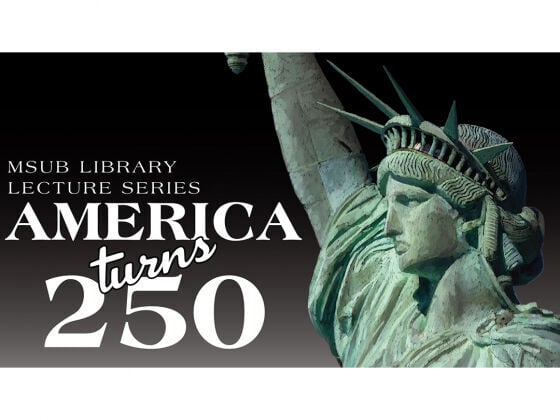

MSU Billings annual Library Lecture Series focuses on the impacts and memories of America as it turns 250. MSU BILLINGS NEWS – The fireworks and celebrations of America’s 250th birthday may have subsided in July, but the historical lessons remain abundant.
The series of five lectures and some associated traveling exhibits are the focus this fall for the annual Montana State University Billings Library Lecture Series. The lectures are on Tuesday nights starting Oct. 6 and occur weekly through Nov. 3.
All lectures start at 6:30 p.m. and will be held in Library Building Room 152 on the MSU Billings University Campus. The room is accessed from the upper lobby connecting the Library and the Liberal Arts Building. Free event parking is available at the MSU Billings Parking Garage.
People are also reading…
Attendance for the lectures and visits to the traveling exhibits are free and open to the public.
“The series of lectures and the traveling exhibits provide an amazing opportunity for students, the citizens of Billings and the region to better understand how far we’ve come in 250 years,” said Eileen Wright, MSUB Library Director. “It will feature a wide array of speakers, including historians and a historical fiction author.”
“America Turns 250” has lectures that cover a variety of topics, including:
Oct. 6: “The Montana Constitution Roadshow: A Shared Heritage”
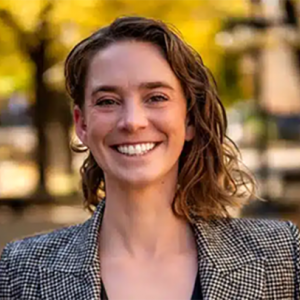
By Rylee Sommers-Flanagan. Sommers-Flanagan explores the fascinating story behind Montana’s foundational legal document. She will offer glimpses into Montana’s early history, including growth through federal laws incentivizing investment in agriculture, and the colorful history of the infamous Copper Kings’ domination of the 1889 State Constitution. Sommers-Flanagan is a fifth-generation Montanan who grew up in Missoula and spent summers on the family’s working ranch in Absarokee. She founded Upper Seven Law in 2021, and in the years since, Upper Seven has filed 25 cases—prevailing in the vast majority—largely focused on challenging unconstitutional legislation and conduct on behalf of Montanans around the state.
Oct. 13: “Revolutionary: Who was Deborah Samson?”
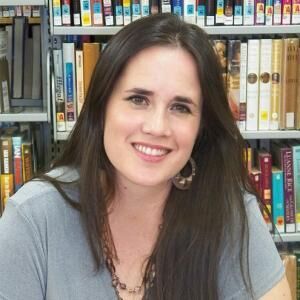
By Amy Harmon. Harmon is the author of “A Girl Called Samson,” a fictionalized account of Deborah Sampson. The National Women’s History Museum says that Samson – born as Deborah Sampson – was a Massachusetts woman who disguised herself as a man in order to serve in the Continental Army during the Revolutionary War. Samson served under the name of Robert Shirtliff until she was in uniform for 17 months before her gender was discovered. Harmon’s historical fiction also ties in themes of indentured servitude and romance. Harmon, a Wall Street Journal, USA Today, and New York Times bestselling author, has written 21 novels. Her latest book is “The Outlaw Noble Salt” and was published in 2024.
Oct. 20: “Revolutionary Legacies: The Politics of Independence in the Early American Republic”
By Dr. Emily Arendt, MSU Billings History Department chair. Arendt will remind attendees that even though the Treaty of Paris officially ended the Revolutionary War in 1783, the battle over the ideals of independence and ideals lingered for years. This talk explores the ways that the Revolution was remembered and manipulated by political actors in the earliest years of the fledgling nation’s history and offers insight into the ways that, even today, the past serves a political purpose. Arendt has been at MSU Billings since 2014. Her research interests center around partisan politics in the early American republic, particularly how non-voters — especially women — exerted influence to impact electoral politics and policy debates.
Oct. 27: “Testing the Limits of Revolutionary Fervor: The US Response to the Haitian Revolution, 1791-1804”
By Dr. Joseph Bryan, associate professor of history at MSU Billings. His presentation will look at the impacts the Haitian Revolution had on the presidencies of George Washington, John Adams, and Thomas Jefferson and will analyze the limits of revolutionary rhetoric as American citizens and politicians grappled with Black freedom, autonomy, and nationhood. Bryan teaches courses on the 18th-century Enlightenment, the Haitian Revolution, and an international history of punk rock.
Nov. 3: “Revolutionary Violence and the Origins of American Constitutions”
By Dr. Mark Boonshoft, of history and the Conrad M. Hall Chair in American Constitutional History at the Virginia Military Institute. Boonshoft notes that the Revolutionary War was a war for independence, but also a war for self-government. This lecture suggests that the experience of war and violence — and the desire to bring order of revolutionary chaos — informed Americans as they wrote constitutions as much as, if not more than, abstract political philosophy or historical experience.
In addition to the lectures, the MSU Billings Library will be hosting two traveling exhibits related to the America 250 celebration.
- The Montana Tapestry: Pepple and Places from 1776 to Today: On display from the last week of September through Nov. 13, this is a five-panel pop-up banner exhibit that introduces eight Montanans who have made significant contributions to the state and nation since 1776. Guided by the Dakota phrase Mitakuye Oyasin — "all my relations" — the exhibit invites viewers to consider how they are connected to Montana and the United States across past, present, and future. The display is a project of the Montana250 Commission, in partnership with the Montana Historical Society and Humanities Montana.
For more information, contact the MSU Billings Library at (406) 657-1662.
--- # # # ---


