


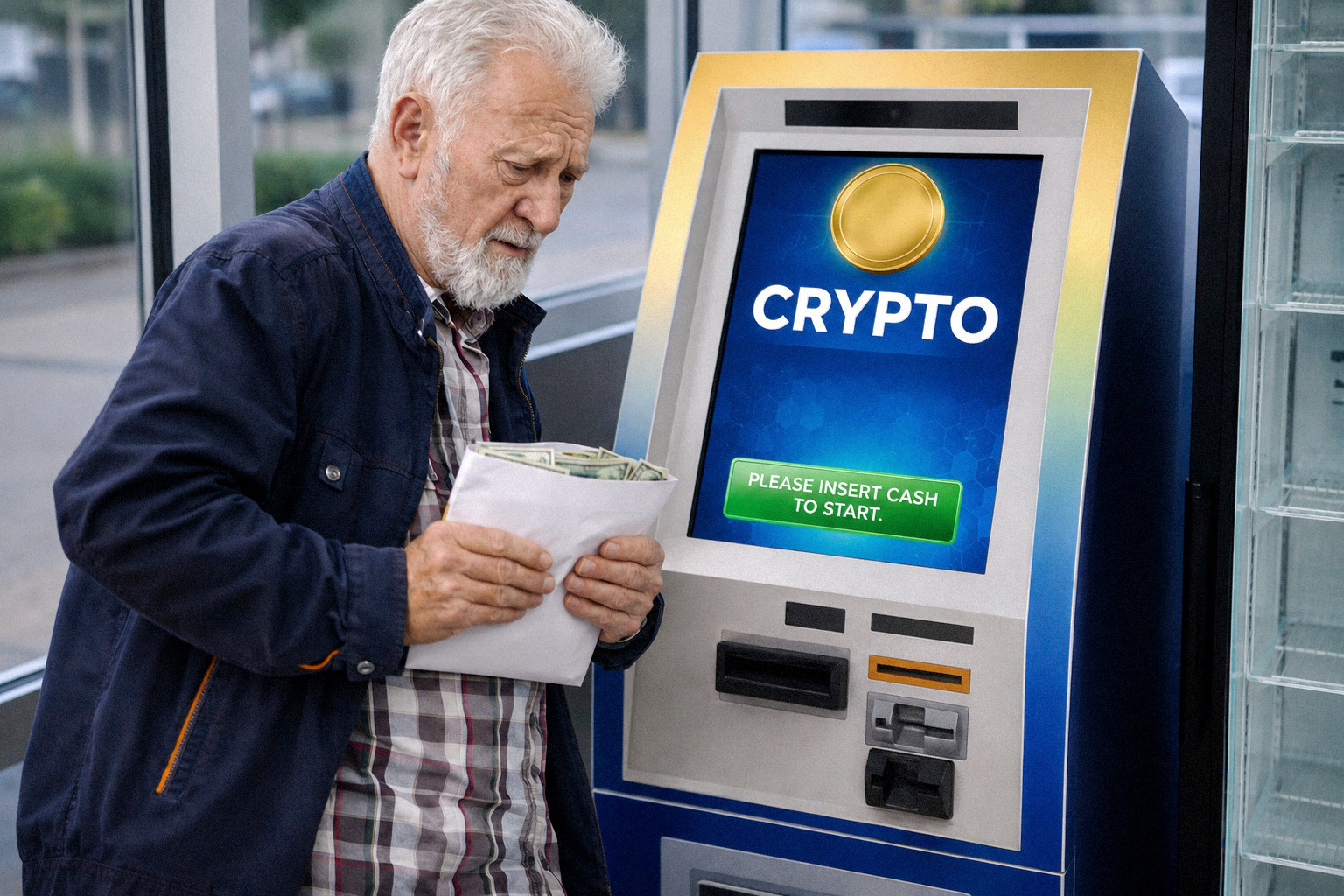
A cash withdrawal. A trip to the gas station. A machine that looks harmless enough, tucked next to the lottery tickets and energy drinks. For a growing number of older Montanans, that sequence has ended in devastating financial loss.
AARP Montana is moving to change that. As part of its preparation for the 2027 Legislative Session, the organization is laying the groundwork for stronger consumer protections against cryptocurrency kiosk fraud, a scheme that's draining bank accounts and retirement savings across the state at an alarming pace.
The numbers tell a troubling story. Montanans lost a record $53 million to cybercrime in 2025, according to the FBI, up from roughly $31.6 million the year before. Cryptocurrency-related fraud is a major driver of that spike, and older adults remain among the most frequently targeted victims.
What Cryptocurrency Kiosks Actually Do
Cryptocurrency kiosks, sometimes called Bitcoin ATMs, let people buy cryptocurrency using cash. They're legal, and legitimate transactions do happen through them. But these machines have also become a preferred tool for scammers, largely because they offer few of the safeguards found at banks and credit unions.
Montana has approximately 400 of these kiosks scattered across convenience stores, gas stations, and grocery stores. For older residents running errands, encountering one is increasingly routine, whether they're looking for one or not.
Legitimate cryptocurrency transactions don't require a kiosk at all. Consumers can buy or transfer crypto through online platforms using a computer or phone. That reality has led policymakers and consumer advocates across the country to ask a pointed question: do the benefits of these machines outweigh the risks they create for consumers?
How the Scam Works
The pattern shows up again and again. A criminal poses as a government official, a law enforcement officer, tech support, a bank representative, or even a romantic interest. The victim hears that something urgent demands immediate action. They're told to withdraw cash, drive to a cryptocurrency kiosk, and feed that cash into the machine to send money to an account the scammer provides.
Once the transaction clears, the funds move into the criminal's digital wallet. Recovery at that point is rare.
A Threat That's Growing Nationally and Locally
The FBI reports Americans lost more than $389 million to cryptocurrency kiosk scams in 2025 alone, and experts suspect the real total runs higher, since fraud tends to go underreported. Adults 60 and older accounted for the majority of reported losses nationwide.
Montana isn't immune to the trend. Law enforcement officials in the state have repeatedly flagged investment scams, romance scams, and impersonation scams involving cryptocurrency as a growing threat to older residents. State officials have also noted a rising number of complaints tied specifically to kiosk transactions, which has spurred public awareness campaigns and early conversations about legislative solutions.
Why AARP Montana Is Stepping In
Protecting older adults from financial exploitation sits at the core of AARP Montana's mission, alongside its work on Social Security, Medicare, caregiving support, and healthy living for the state's 50-plus community.
"The rapid growth of cryptocurrency kiosk fraud should concern anyone who cares about protecting Montana consumers," said AARP Montana State Director Tim Summers. "Evidence from across the country suggests these machines are involved in a disproportionate share of scam-related losses, particularly among older adults. Montana policymakers should carefully consider whether any benefits these kiosks provide justify the risks they pose to consumers."
Investigations in other states have found a striking share of kiosk transactions tied directly to fraud. Combined with the losses piling up among older Americans, those findings have prompted a serious look at whether current consumer protections go far enough.
States have responded in different ways. More than 35 have already taken action, through measures like transaction limits, mandatory fraud warnings at kiosks, licensing requirements, refund policies for victims, tighter oversight, and in some cases, outright bans on the machines.
What Comes Next
No specific legislative proposal has been introduced yet in Montana. AARP Montana plans to work with lawmakers, law enforcement, consumer advocates, and other stakeholders in the months ahead to shape policy that gives Montanans real protection against this fraud, without losing sight of legitimate uses for the technology.
This effort is one piece of AARP Montana's broader work in senior advocacy, a mission that spans retirement security, caregiving resources, and fraud prevention for the state's growing population of older residents.
Get Involved
Montanans who want to follow AARP Montana's legislative priorities for 2027, including this push on cryptocurrency kiosk fraud, can sign up for advocacy updates at aarp.org/MTadvocacy.
For those looking to learn more about spotting scams before money changes hands, AARP's Fraud Watch Network offers resources at www.aarp.org/FraudWatch.
Questions about AARP Montana's work can be directed to the state office at 866-295-7278 or mtaarp@aarp.org. More information is available at AARP Montana.
Lee Enterprises newsrooms were not involved in the creation of this content.


